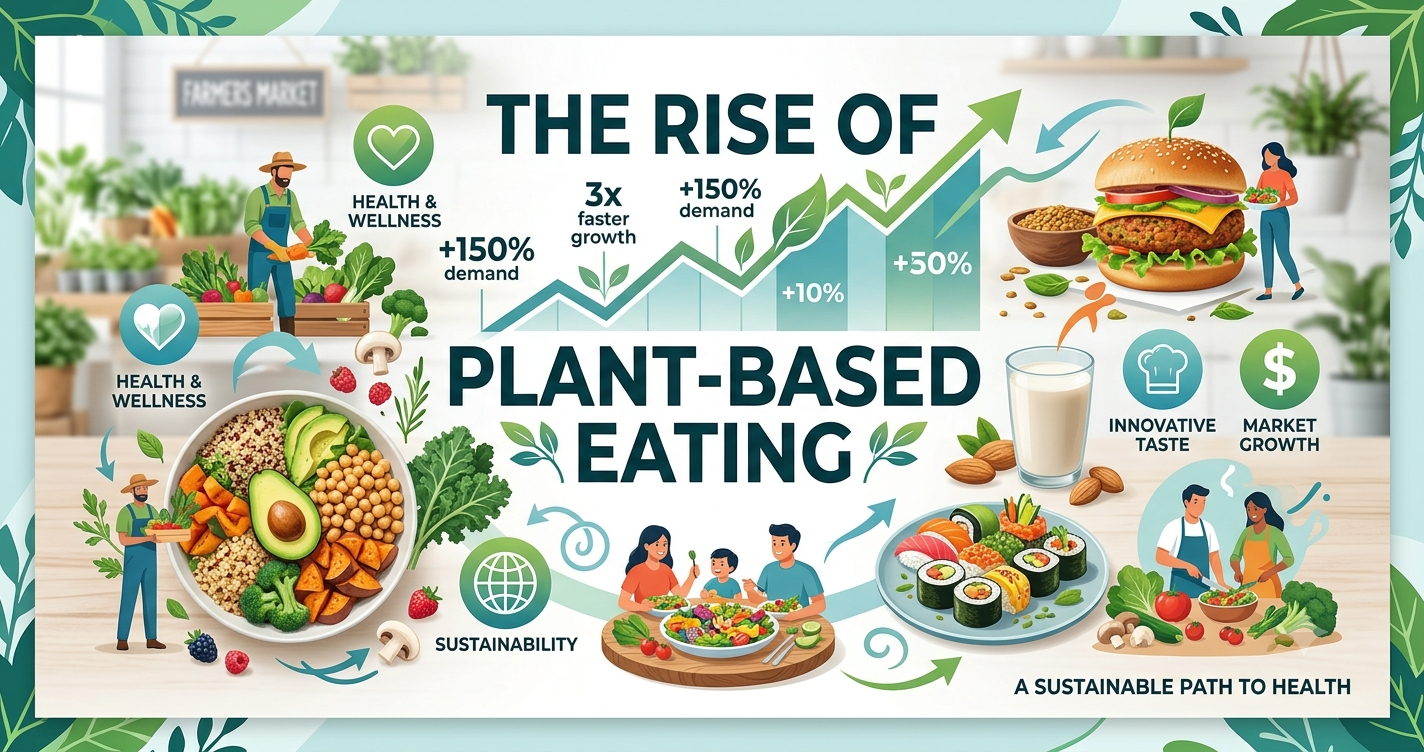
In recent years, plant-based eating has transformed from a niche lifestyle choice into a global movement. More people than ever are choosing to incorporate plant-based foods into their daily diets, driven by concerns about health, environmental sustainability, and animal welfare. From supermarkets stocking meat alternatives to restaurants offering dedicated vegan menus, the popularity of plant-based eating continues to grow at an impressive pace.
What Is Plant-Based Eating?
Plant-based eating focuses primarily on foods derived from plants, including fruits, vegetables, whole grains, legumes, nuts, and seeds. While some people follow a strictly vegan diet and avoid all animal products, others simply reduce their consumption of meat and dairy while increasing their intake of plant-based foods. This flexible approach makes plant-based eating accessible to a wide range of individuals.
Health Benefits
One of the main reasons people adopt a plant-based diet is its potential health benefits. Research suggests that diets rich in plant foods can help lower the risk of heart disease, high blood pressure, type 2 diabetes, and certain types of cancer. Plant-based foods are naturally rich in fiber, vitamins, minerals, and antioxidants, which support overall health and well-being.
Additionally, many people find that a balanced plant-based diet helps with weight management. Whole plant foods are often lower in calories and saturated fat compared to processed and animal-based products, making them a healthy choice for maintaining a healthy weight.
Environmental Impact
Environmental awareness has also played a significant role in the rise of plant-based eating. Food production, particularly livestock farming, contributes significantly to greenhouse gas emissions, deforestation, and water usage. By choosing more plant-based foods, individuals can reduce their environmental footprint and help conserve natural resources.
Studies indicate that producing plant-based proteins such as beans, lentils, and peas generally requires fewer resources than producing animal-based proteins. As concerns about climate change continue to grow, many consumers see plant-based eating as a practical way to support sustainability.
Expanding Food Choices
The plant-based food industry has experienced remarkable innovation. Today, consumers can find a wide variety of meat alternatives, dairy-free milks, plant-based cheeses, and vegan desserts. Advances in food technology have made these products more flavorful, nutritious, and widely available than ever before.
Restaurants and food brands have responded to increasing demand by expanding their plant-based offerings. This has made it easier for people to explore plant-based eating without feeling limited in their food choices.
Challenges and Considerations
While plant-based eating offers many benefits, it is important to ensure nutritional balance. Key nutrients such as vitamin B12, iron, calcium, omega-3 fatty acids, and protein should be carefully considered when planning meals. A well-balanced diet that includes a variety of plant foods can help meet these nutritional needs.
Some individuals may also find the transition challenging at first. Gradually incorporating more plant-based meals and experimenting with new recipes can make the process more enjoyable and sustainable.
The Future of Plant-Based Eating
The future of plant-based eating looks promising. As awareness of health and environmental issues continues to grow, experts predict that plant-based foods will become an even more significant part of global diets. Food companies are investing heavily in innovation, and consumers are increasingly open to trying new alternatives.
Whether motivated by personal health, environmental concerns, or curiosity, more people are discovering the benefits of plant-based eating. This growing movement is reshaping the way we think about food and creating new opportunities for a healthier and more sustainable future.
Conclusion
Plant-based eating is more than a passing trend—it represents a significant shift in consumer habits and food culture. With its potential health benefits, positive environmental impact, and expanding range of delicious options, plant-based eating continues to gain momentum around the world. As people seek healthier and more sustainable lifestyles, the rise of plant-based eating is likely to remain one of the most influential food trends of the modern era.



Leave a Reply