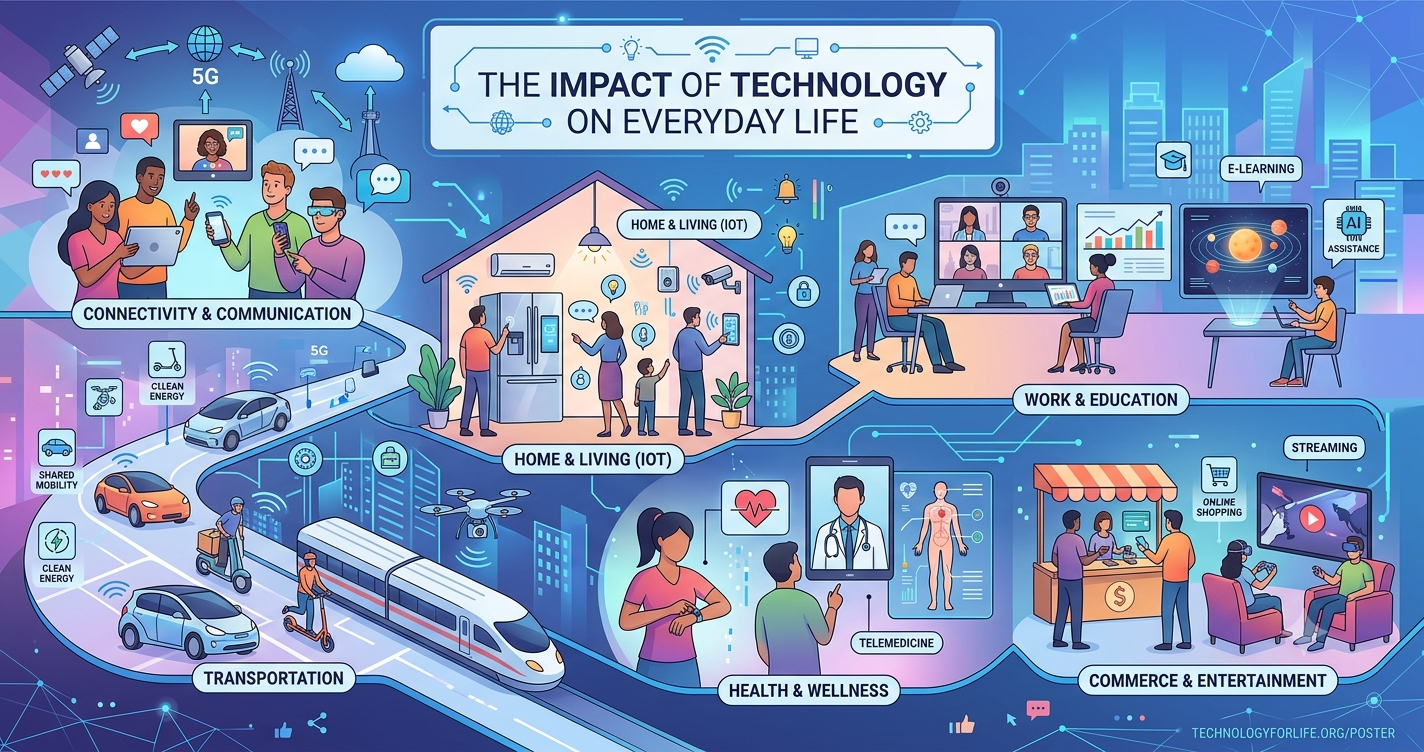
Technology has become deeply woven into the fabric of modern life. From the moment we wake up to the time we go to sleep, we interact with digital tools, smart devices, and online platforms that shape how we communicate, work, learn, and even think. What once seemed futuristic is now part of everyday routine.
Communication in a Connected World
One of the most visible impacts of technology is in communication. Smartphones, messaging apps, and social media platforms have made it possible to connect instantly with anyone across the globe.
Devices like the iPhone and operating systems such as Android allow people to send messages, make video calls, and share moments in real time. Platforms developed by companies like Meta Platforms and Google have transformed how people interact socially and professionally.
Today, distance is no longer a barrier to staying in touch with family, friends, or colleagues.
Technology in Education
Education has also been revolutionized. Online learning platforms, digital classrooms, and AI-powered tools have made education more accessible than ever before.
Students can attend virtual classes, access global libraries, and learn new skills from anywhere. Tools like Google Classroom and video conferencing platforms have enabled flexible learning, especially during global disruptions like the COVID-19 pandemic.
Artificial intelligence is also being used to personalize learning experiences, helping students learn at their own pace.
Work and the Digital Economy
The workplace has changed dramatically due to technology. Remote work, cloud computing, and automation have redefined traditional office environments.
Companies such as Microsoft provide tools like cloud services and productivity software that allow teams to collaborate from different parts of the world. Meanwhile, platforms like Zoom and Slack have made virtual teamwork seamless.
Automation and AI are also improving efficiency in industries such as manufacturing, finance, and customer service, though they also raise concerns about job displacement.
Entertainment and Media Consumption
Entertainment has shifted from traditional TV and radio to digital streaming and on-demand content. Services like Netflix, YouTube, and Spotify allow users to watch or listen to what they want, whenever they want.
Social media platforms and gaming have also become major sources of entertainment, especially among younger generations. Content creation has become more democratized, allowing anyone with a smartphone to become a creator.
Everyday Convenience and Smart Living
From online shopping to navigation apps, technology has made daily tasks easier and faster. People can order groceries, book rides, or pay bills with just a few taps.
Smart home devices such as voice assistants, smart lights, and security systems are also becoming more common, making homes more efficient and secure.
Even transportation has evolved with GPS navigation, ride-sharing apps, and electric vehicles contributing to smarter mobility.
Challenges of a Tech-Driven World
While technology brings many benefits, it also comes with challenges. Privacy concerns, screen addiction, misinformation, and cybersecurity threats are growing issues in the digital age.
It is important for individuals and society to use technology responsibly and maintain a balance between digital and real-life interactions.
Conclusion
Technology has transformed everyday life in almost every possible way. It has made communication faster, education more accessible, work more flexible, and entertainment more personalized. As innovation continues, its influence will only grow stronger.



Leave a Reply